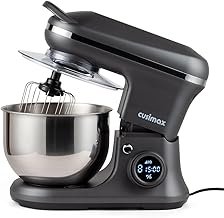
For anyone who bakes with any regularity, a stand mixer is one of those appliances that genuinely changes the experience. It handles the mechanical work of mixing, kneading, and whipping — tasks that can be tiring and time-consuming by hand — so the cook can focus on other aspects of baking. But a stand mixer is also a significant purchase, both in terms of cost and counter space. Understanding what it actually does and whether it suits your needs is worth the time before buying.
What Is a Stand Mixer?
A stand mixer is a countertop appliance with a motorized mixing head that rotates around a stationary bowl. Unlike a handheld mixer, the stand mixer does not require you to hold it — you add the ingredients, set the speed, and the machine does the work. Most stand mixers come with multiple attachments and can be used for a wide range of tasks beyond simple mixing.
Key Features
- Multiple speed settings: Stand mixers typically offer six to twelve speed settings to handle everything from gentle folding to high-speed whipping.
- Included attachments: Most models come with at least three attachments: a flat beater (for general mixing), a wire whip (for incorporating air), and a dough hook (for kneading bread or pasta dough).
- Bowl capacity: Bowls typically range from 3.5 to 8 quarts or more. Larger bowls are better for big batches; smaller bowls may suit occasional bakers.
- Optional accessory hub: Many stand mixers include a power hub at the front that accepts optional attachments — such as pasta rollers, food grinders, or ice cream makers — sold separately.
- Motor power: Motor wattage varies by model. Higher wattage generally means the motor handles heavier doughs more comfortably without straining.
How It Can Be Used
Baking Cookies, Cakes, and Muffins
The flat beater attachment handles creaming butter and sugar, mixing batter, and incorporating wet and dry ingredients evenly — tasks that a stand mixer performs quickly and consistently.
Whipping Cream and Egg Whites
The wire whip attachment incorporates air into cream or egg whites efficiently. Achieving stiff peaks by hand requires considerable effort; a stand mixer does it in minutes.
Kneading Bread Dough
The dough hook takes over what would otherwise be 8–10 minutes of hand kneading. It develops gluten in bread dough properly while freeing up time and energy for the cook.
Making Pasta Dough
With the dough hook, a stand mixer can also mix and knead fresh pasta dough. Optional roller and cutter attachments (sold separately for most brands) extend this into fully rolled and cut pasta sheets.
Mixing Meatloaf or Meatballs
The flat beater can be used to mix ground meat with seasonings and binders, which some cooks find more thorough and hygienic than hand mixing.
Who Might Benefit Most
- Regular bakers who make cookies, cakes, bread, or pastries frequently
- Anyone who makes yeast breads and finds hand kneading physically demanding
- Those who bake in larger quantities and need a high-capacity mixing solution
- Cooks interested in expanding into pasta making, ice cream, or food grinding via optional attachments
Important Considerations
Counter Space and Weight
Stand mixers are bulky and heavy. Most models weigh between 20 and 30 pounds or more, which makes them difficult to move frequently. If counter space is limited, storage becomes a practical challenge.
Cost
Stand mixers represent a significant investment. Pricing varies widely by brand and capacity, from entry-level models to professional-grade machines. Consider how often you bake and what you will use it for before deciding on a budget.
Maintenance
The bowl and most attachments are typically dishwasher safe. The machine itself should be wiped clean with a damp cloth. Lubricating the moving parts periodically may be needed for long-term maintenance, depending on the model.
Noise
Stand mixers, especially at higher speeds, can be noisy. This is generally not a dealbreaker but worth being aware of, especially in smaller living spaces.
Stand Mixer vs. Hand Mixer
- A hand mixer is lighter, less expensive, and easier to store. It works well for light to medium tasks but cannot handle heavy bread doughs and requires the cook to hold it throughout use.
- A stand mixer is hands-free, more powerful, and significantly more versatile — but it occupies counter space and costs more.
Frequently Asked Questions
What bowl size is best for home baking?
A 5- to 5.5-quart bowl is the most popular choice for home bakers and handles a wide range of batch sizes well. Larger bowls (6–8 quarts) suit those who frequently bake in double batches or make large quantities of bread dough.
Can I use a stand mixer for small batches?
Most stand mixers have a minimum fill requirement — the ingredients need to reach a certain level for the attachment to mix them properly. Very small batches may not mix evenly. Check the manufacturer’s guidance for minimum capacities.
Are stand mixer attachments interchangeable between brands?
Generally, no. Attachments are brand-specific and designed to fit a particular power hub or bowl attachment system. Third-party attachments exist for some popular brands, but compatibility should always be verified.
Conclusion
A stand mixer is a meaningful addition to any kitchen where baking is a regular activity. It takes over the most physically demanding mixing and kneading tasks, produces consistent results, and can expand in functionality through optional attachments. For occasional bakers, a handheld mixer may be more practical — but for those who bake multiple times a week, a stand mixer is a worthwhile and long-lasting investment. You can check more details and current options on Amazon here.