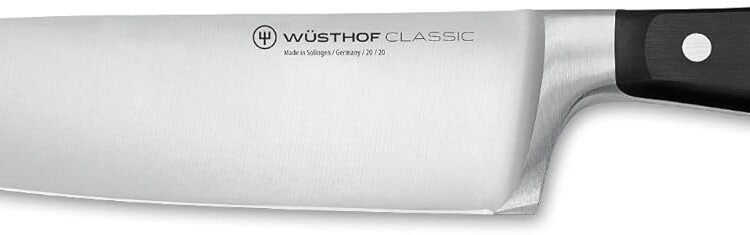
Of all the tools in a kitchen, the chef’s knife is the one that home cooks and professionals alike tend to reach for most often. It is used for chopping, slicing, mincing, dicing, and a dozen other tasks that make up the bulk of everyday cooking. Choosing the right chef’s knife — and understanding what sets a good one apart from an average one — can meaningfully improve both your efficiency and your enjoyment in the kitchen.
What Is a Chef’s Knife?
A chef’s knife is an all-purpose kitchen knife with a broad, tapered blade typically ranging from 6 to 12 inches in length. The blade curves upward toward the tip, which allows a rocking motion during cutting. The handle is designed for a firm, comfortable grip during extended use. It is the single most versatile knife in the kitchen and the one most professional cooks would choose if limited to only one tool.
Key Features to Understand
Blade Material
Most chef’s knives fall into two broad categories:
- Stainless steel: Resistant to corrosion and relatively easy to maintain. Tends to require less sharpening but may not hold an edge quite as long as high-carbon steel.
- High-carbon steel: Takes a sharper edge and holds it longer, but requires more care to avoid rust and staining.
- High-carbon stainless steel: A blend of both, offering good edge retention with reasonable corrosion resistance. Common in many quality kitchen knives.
Blade Style: German vs. Japanese
This is one of the most commonly discussed distinctions in the chef’s knife world:
- German-style: Features a more curved blade with a thicker spine, optimized for the rocking chop. Typically made from softer steel, making it easier to sharpen at home. More durable for heavy tasks like cutting through bones or butternut squash.
- Japanese-style: Features a thinner blade with less curvature, optimized for push cuts and precision slicing. Made from harder steel, which holds a finer edge but can be more brittle.
Handle Construction
Handle materials include wood, synthetic materials (like polypropylene), and composite materials. The handle should feel balanced in your hand and provide a secure grip. Some knives have a full tang (the blade metal extends through the full length of the handle), which many cooks prefer for balance and durability.
Weight and Balance
This is highly personal. Some cooks prefer a heavier knife for chopping through dense vegetables, while others prefer a lighter knife for speed and fatigue reduction during long prep sessions. Ideally, test a knife in hand before purchasing — or read detailed reviews from users with similar preferences.
Blade Length
An 8-inch blade is the most popular all-purpose length and suits most home cooks well. Larger hands or those doing high-volume prep may prefer a 10-inch blade. A 6-inch blade is more maneuverable and works well for smaller tasks and tighter spaces.
How a Chef’s Knife Is Used
- Chopping vegetables (onions, carrots, celery, potatoes)
- Slicing meat and fish
- Mincing herbs and garlic
- Dicing tomatoes and peppers
- Rough-cutting large items like cabbage or pineapple
- Smashing and peeling garlic (using the flat side of the blade)
Who Benefits Most
A quality chef’s knife benefits anyone who cooks regularly at home. Those who spend significant time on prep work — cutting vegetables, portioning proteins, or preparing multiple components for a meal — will notice the most immediate improvement from using a well-made, properly sharpened knife. It is also an ideal first serious knife for beginner cooks looking to upgrade from basic box-set knives.
Important Considerations
Sharpening and Maintenance
A sharp knife is safer and more efficient than a dull one. Most chef’s knives benefit from regular honing (with a honing steel) and periodic sharpening (with a whetstone or professional sharpening service). The frequency depends on how often you cook and what materials you cut.
Cutting Surface
Always use a chef’s knife on a cutting board — ideally wood or plastic. Glass, ceramic, and stone surfaces damage the blade edge quickly.
Hand Grip
The pinch grip — where the thumb and forefinger pinch the base of the blade, with the remaining fingers wrapped around the handle — is the most recommended grip for control and safety. Learning proper technique can significantly improve your cutting speed and reduce fatigue.
Chef’s Knife vs. Other Kitchen Knives
- Chef’s knife vs. santoku: The santoku is a Japanese all-purpose knife with a shorter, flatter blade. It is excellent for slicing and fine cutting but less suited to the rocking chop technique.
- Chef’s knife vs. bread knife: A bread knife has a serrated edge specifically designed for cutting through crusty bread. It is not a substitute for a chef’s knife for general tasks.
- Chef’s knife vs. paring knife: A paring knife is small (3–4 inches) and designed for intricate tasks like peeling, trimming, and detail work. It complements, rather than replaces, a chef’s knife.
Frequently Asked Questions
How often should I sharpen my chef’s knife?
This depends on how frequently you cook and what you cut. For most home cooks, professional sharpening once or twice a year, combined with regular honing before each use, is sufficient to keep a knife performing well.
Can I put a chef’s knife in the dishwasher?
Most knife manufacturers advise against it. The heat, moisture, and jostling inside a dishwasher can damage the blade edge, dull the metal, and crack or warp wooden handles. Hand washing and drying immediately after use is generally recommended.
What length chef’s knife is best for beginners?
An 8-inch chef’s knife is typically recommended for beginners. It is long enough to handle most tasks without feeling unwieldy, and it is the length most commonly featured in cooking guides and instructional resources.
Conclusion
A good chef’s knife is arguably the single most important investment a home cook can make. It is the tool you will use more than any other, and a quality knife — properly maintained — will last for many years of daily use. Whether you cook occasionally or every night, choosing a knife that feels right in your hand and suits your cooking style can make prep work more enjoyable and efficient. You can check more details and current options on Amazon here.