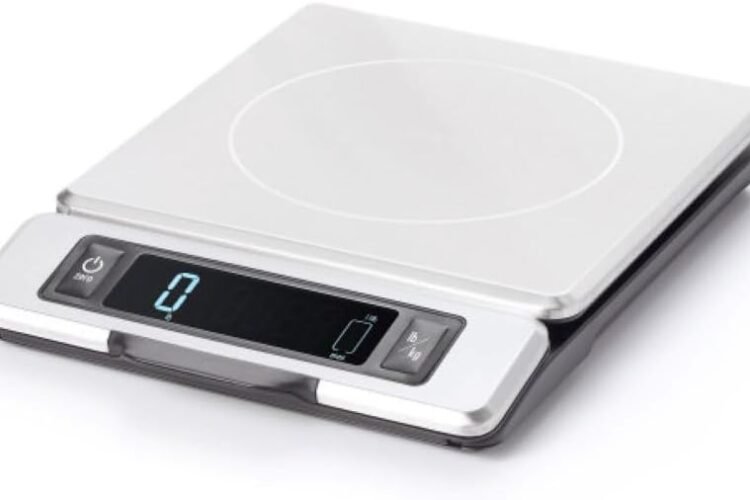
A kitchen scale is one of those tools that people often discover they needed all along once they start using one. For baking especially, measuring by weight rather than volume can be the difference between consistent, reliable results and unpredictable ones. But kitchen scales also have practical applications in everyday cooking, portion control, recipe scaling, and even coffee brewing. This guide covers what kitchen scales are, how they work, and what to look for when choosing one.
Why Weight Measurement Matters
Most home cooks in the United States measure by volume — cups, tablespoons, teaspoons. While this works reasonably well for many cooking applications, it introduces variability. A cup of flour, for example, can weigh anywhere from 120 grams to 160 grams depending on how it was scooped, settled, or measured. This 30% difference can significantly affect the texture and structure of baked goods. In baking, which is essentially chemistry, consistent weight measurements lead to consistent results.
Many recipes from European countries and professional baking books are written in grams or ounces for precisely this reason. A kitchen scale allows you to follow these recipes accurately and reproduce your own recipes with much greater consistency.
Types of Kitchen Scales
Digital Scales
Digital kitchen scales are the most widely used type for home cooking. They display measurements on an electronic screen, typically with a precision of 1 gram or 0.1 gram depending on the model. They are easy to read, quick to use, and generally more accurate than mechanical alternatives.
Mechanical (Analog) Scales
Mechanical scales use a spring mechanism and display weight on a dial. They are durable and require no batteries, but they are generally less precise than digital scales and harder to read accurately.
Key Features
- Capacity: Most kitchen scales handle up to 5kg (about 11 pounds) or 11kg (about 24 pounds). For most baking and cooking tasks, a 5kg capacity is sufficient.
- Precision: Standard digital scales measure in 1-gram increments. Higher-precision scales (0.1 gram) are valuable for specialty applications like coffee brewing, where small amounts matter significantly.
- Tare function: The tare button allows you to reset the scale to zero with a container on it, so you can measure only the ingredient being added. This is essential for practical use.
- Unit switching: Most digital scales switch between grams, ounces, pounds, and sometimes milliliters at the press of a button.
- Display size and clarity: A clear, easily readable display is important, especially when leaning over a bowl to add ingredients.
- Platform size: A wider platform accommodates large bowls and baking sheets without blocking the display.
- Auto shut-off: Useful for battery conservation, though it can be inconvenient during long baking sessions if it activates too quickly.
How a Kitchen Scale Can Be Used
Baking
Weighing flour, butter, sugar, and other baking ingredients ensures consistent results batch after batch. Many bakers find that switching to weight measurements improves their results almost immediately.
Coffee Brewing
For pour-over, AeroPress, and other precision brewing methods, the ratio of coffee to water matters significantly. A kitchen scale allows you to measure both accurately and repeat a successful recipe reliably.
Portion Control
Weighing food portions is the most accurate way to track intake for those managing calorie or macronutrient goals. It is more reliable than eyeballing or using measuring cups for many foods.
Recipe Scaling
Scaling a recipe up or down is much easier when ingredients are measured by weight, since multiplying grams is more straightforward than converting fractions of cups.
General Cooking
Weighing pasta, meat portions, or produce for a recipe is faster and uses fewer dishes than measuring cups and spoons.
Who Benefits Most
- Bakers who want more consistent results with bread, pastry, and other precision baking
- Coffee enthusiasts using pour-over or precision brewing methods
- Those following recipes written in metric measurements
- Anyone tracking portions for dietary or health reasons
- Cooks who want to simplify their measurement workflow and reduce dishes
Important Considerations
Precision vs. Capacity Trade-off
High-precision scales (0.1g increments) tend to have lower capacity. If you need a scale for both coffee brewing and large-batch baking, you may need two scales — one high-precision for small amounts and one with greater capacity for larger quantities.
Durability and Spill Resistance
Kitchen scales operate in an environment where spills are common. Look for models with smooth, easy-to-wipe surfaces and sealed buttons. Fully waterproof scales are available for those who need extra protection.
Frequently Asked Questions
Is a kitchen scale necessary for baking?
It is not strictly necessary — people have baked successfully by volume for decades. But if you find that your baked goods are inconsistent or you follow a lot of professional recipes, a kitchen scale can make a meaningful difference.
How accurate are digital kitchen scales?
Most standard digital kitchen scales are accurate to within 1 gram, which is sufficient for most baking and cooking applications. Higher-end models used for coffee or precision cooking may offer 0.1-gram accuracy.
Do I need a kitchen scale if I already have measuring cups?
Measuring cups are fine for many cooking tasks, especially liquid measurement. But for baking, a scale offers more consistency and accuracy. The two tools are complementary rather than interchangeable.
Conclusion
A kitchen scale is an inexpensive, practical tool that improves precision in baking, simplifies recipe work, and adds value across a range of everyday cooking tasks. For anyone who bakes regularly, it is close to essential. For other cooks, it offers a level of accuracy and convenience that quickly becomes routine. You can check more details and current options on Amazon here.