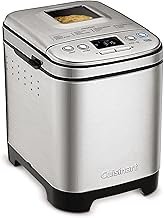
A bread machine automates one of the most satisfying — and sometimes most intimidating — aspects of home cooking: baking fresh bread. For those who enjoy homemade bread but find manual kneading and precise timing challenging, a bread machine can make fresh-baked loaves an accessible daily routine. This guide covers how bread machines work, what they do well, their limitations, and what to consider when evaluating one.
What Is a Bread Machine?
A bread machine is a countertop appliance with a motorized mixing paddle inside a baking pan. You add ingredients in the correct order, select a program, and the machine handles the mixing, kneading, rising (proofing), and baking automatically. Most machines take between 2.5 and 4 hours to produce a finished loaf, though rapid settings can reduce this to around 1 hour for basic recipes.
Key Features
- Multiple baking programs: Basic white bread, whole wheat, French bread, sweet bread, gluten-free, pizza dough, and jam are common settings on multi-function machines.
- Loaf size options: Most machines offer at least two or three loaf size settings (typically 1 lb, 1.5 lb, and 2 lb), allowing you to adjust output to your household size.
- Crust settings: Light, medium, and dark crust settings allow you to adjust the browning of the final loaf.
- Delay timer: A delay start function allows you to load the machine in the evening and wake up to fresh-baked bread, or load it in the morning for bread ready in the afternoon.
- Dough-only mode: Many machines offer a dough-only cycle that handles mixing and kneading but not baking, allowing you to then shape and bake the dough in a conventional oven for better crust and shape.
How It Can Be Used
Basic Loaves
White, whole wheat, and multigrain sandwich loaves are the most straightforward bread machine applications. The machine handles the full process from ingredients to finished loaf.
Specialty Breads
Cinnamon raisin bread, brioche-style sweet breads, herb breads, and cheese breads can all be produced with appropriate recipes and machine programs.
Pizza and Focaccia Dough
Using the dough-only cycle, a bread machine can mix and proof pizza or focaccia dough that you then shape and bake in the oven at high heat for better results than the machine could produce.
Rolls and Smaller Shapes
The dough-only cycle can produce dough that is then divided and shaped into rolls, baguettes, or dinner rolls for oven baking.
Limitations
- Bread machine loaves have a distinctive shape — a square-ish, high-sided loaf — that differs from hand-shaped artisan breads.
- The paddle leaves a hole in the bottom of each loaf, which is a cosmetic rather than practical issue.
- Crust development is generally softer in a bread machine than in a conventional oven.
- Some recipes and bread types (sourdough, artisan breads) are better suited to conventional oven baking.
Who Benefits Most
- Those who want fresh bread regularly but lack the time, experience, or inclination for manual bread-making
- Families who consume a loaf of bread per week and want to reduce store-bought purchases
- Anyone with dietary restrictions who needs to control every ingredient in their bread
- Cooks who want to make fresh dough for pizza, rolls, or specialty breads without full manual kneading
Frequently Asked Questions
Can I use any bread recipe in a bread machine?
Not always. Bread machine recipes are formulated for the specific kneading and proofing cycles of the machine. Conventional bread recipes may need adjustment for use in a bread machine. Dedicated bread machine recipe books or online resources designed for bread machines provide the most reliable results.
How much counter space does a bread machine require?
Most standard bread machines are roughly the size of a large slow cooker or small microwave — approximately 14 x 9 x 12 inches. Some models are more compact; larger machines take up more space.
Does bread machine bread taste different from oven-baked bread?
Yes. Bread machine bread generally has a softer crust and a more uniform crumb than oven-baked bread. It tends to taste very good — particularly when fresh — but differs in texture from artisan or crusty loaves. For everyday sandwich bread, many people find bread machine results excellent.
Conclusion
A bread machine is a practical appliance for households that value fresh bread but want a mostly hands-off process. It makes consistent, genuinely good loaves with minimal effort, handles pizza and roll dough effectively, and offers meaningful control over ingredients for those with dietary needs. For the right household, it is an appliance that earns its counter space quickly. You can check more details and current options on Amazon here.