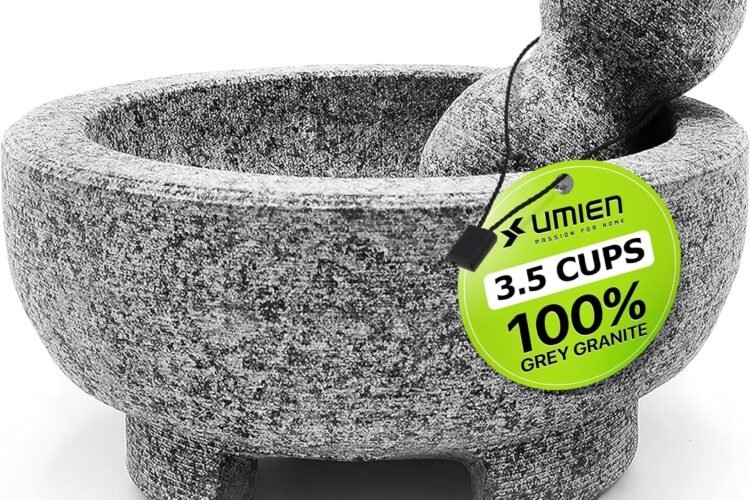
Few kitchen tools carry as much history as the mortar and pestle. Used for thousands of years across cultures worldwide, this simple grinding implement remains genuinely useful in modern kitchens — not as a novelty or decorative piece, but as a functional tool that performs certain tasks better than any electric appliance. Understanding what a mortar and pestle does well and when it outperforms modern alternatives helps clarify whether it belongs in your kitchen setup.
What Is a Mortar and Pestle?
A mortar is a bowl-shaped vessel, and the pestle is the club-shaped tool used to grind and crush ingredients inside it. The grinding action releases oils and compounds from whole spices, herbs, and other ingredients, producing flavors that pre-ground or blender-processed alternatives cannot always replicate.
Materials and Their Differences
Granite (Stone)
One of the most popular and practical materials for a mortar and pestle. Granite is extremely durable, heavy (which provides stability during use), and has a rough texture that grips ingredients well. A granite mortar and pestle can handle dry spices, wet pastes, and garlic equally well. It requires a brief initial seasoning process to remove stone dust.
Marble
Smooth and visually elegant, but the smooth surface can be less effective for grinding fine powders compared to rougher stone. Better suited for light crushing tasks than for making fine pastes.
Ceramic
Easy to clean and non-porous, ceramic mortars work well for mixing and light grinding but may not handle very hard spices as effectively as stone.
Wood
Traditional in some cuisines. Less durable for heavy grinding and absorbs flavors over time, which can be an advantage (seasoned with previous use) or disadvantage depending on your cooking habits.
How a Mortar and Pestle Can Be Used
Grinding Whole Spices
Toasting and grinding whole spices fresh produces more vibrant, complex flavor than pre-ground alternatives. A mortar and pestle allows you to control the texture — from coarse to fine — as needed for each dish.
Making Pastes
Dishes like Thai curry paste, harissa, chermoula, and traditional pesto are classically made in a mortar and pestle. The grinding and crushing action creates a textured emulsion that differs subtly but noticeably from blender-made versions.
Garlic and Ginger
Mashing garlic in a mortar produces a smooth paste that integrates more fully into sauces and dressings than minced or pressed garlic. The same applies to fresh ginger.
Herb Preparations
Crushing fresh herbs releases their oils more effectively than chopping, which can be useful for guacamole, herb-based condiments, or muddled cocktail ingredients.
Cracking Peppercorns and Seeds
A mortar and pestle provides a convenient way to crack peppercorns, coriander seeds, fennel seeds, and similar spices to a desired coarseness.
Mortar and Pestle vs. Spice Grinder
- A spice grinder (electric blade grinder) is faster for large quantities and produces finer powder more easily.
- A mortar and pestle offers more control over texture, is better for wet pastes, and is easier to clean for small quantities.
- Many experienced cooks use both, choosing based on the task.
Who Benefits Most
- Cooks who use whole spices and want fresh-ground flavor
- Those who make Thai, Indian, Middle Eastern, or other cuisines where fresh spice pastes are fundamental
- Anyone who makes guacamole, pesto, or herb-based sauces regularly
- Cocktail enthusiasts who muddle herbs or spices
Frequently Asked Questions
What size mortar and pestle is most practical?
For most home cooks, a mortar with an interior diameter of around 6–8 inches and a capacity of at least 2 cups is the most versatile. Smaller mortars are convenient for individual portions of garlic or single-spice grinding.
How do I clean a granite mortar and pestle?
Rinse with warm water and scrub with a stiff brush. Avoid soap on stone mortars, as the stone can absorb it. Dry thoroughly before storing. Strong-smelling ingredients like garlic can be cleared out by grinding a small amount of dry rice in the mortar.
Conclusion
A mortar and pestle is a tool that rewards those who use it — particularly for freshly ground spices, traditional curry pastes, and herb preparations. While it cannot match the speed or volume capacity of electric alternatives, the results it produces for certain tasks are distinctively good. You can check more details and current options on Amazon here.