A colander or strainer is one of those fundamental kitchen tools that almost every cook owns, yet the quality and type varies enormously. The right colander makes a meaningful difference in how convenient and effective draining pasta, rinsing produce, and straining liquids can be. This guide covers the main types of colanders and strainers, what to look for, and how they differ in practical use.
Colander vs. Strainer: What Is the Difference?
The terms are often used interchangeably, but there are distinctions:
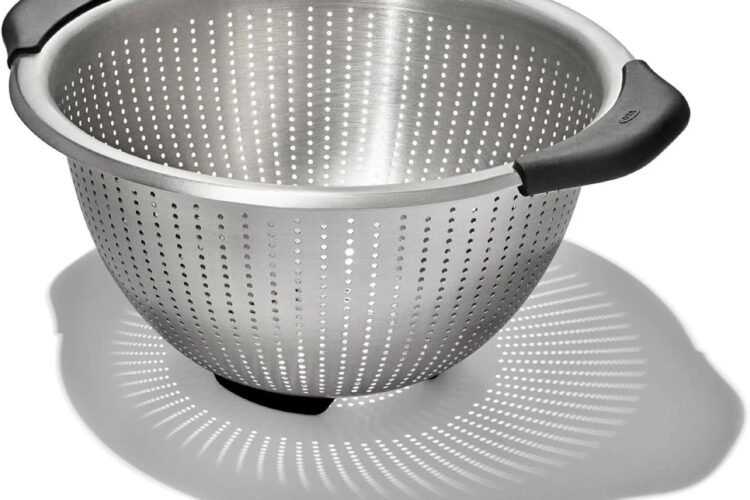
- A colander is a bowl-shaped vessel with holes, designed to drain large quantities of liquid from food. It typically has a sturdy base or feet to stand in a sink, and handles for lifting.
- A strainer is typically finer — either a mesh strainer (fine or medium mesh) or a perforated strainer with smaller holes — and is used to strain finer particles from liquids, like seeds from juice or lumps from a sauce.
Most kitchens benefit from having both a colander for pasta and large-scale draining, and at least one fine mesh strainer for sauces, stocks, and baking tasks.
Types of Colanders and Strainers
Stainless Steel Colander
Durable, non-reactive, easy to clean, and oven-safe for warming (not cooking). Stainless steel colanders are a reliable, long-lasting choice. They do not absorb odors or stains and hold up well to regular heavy use.
Plastic Colander
Lightweight and inexpensive. Works well for most draining tasks but is not heat-resistant and can stain with tomato-based foods over time.
Fine Mesh Strainer
Available in small (3–4 inches) to large (10+ inches) diameters, fine mesh strainers are essential for tasks like straining sauces, removing seeds from fruit purees, sifting flour, or rinsing small grains like quinoa that would fall through a standard colander.
Chinois (Conical Strainer)
A cone-shaped fine mesh strainer used in professional kitchens for straining stocks, sauces, and custards to a very smooth consistency. Rarely necessary for home cooks but valuable for those pursuing fine cooking techniques.
Key Features to Consider
- Size: Match the size of your colander to the size of pasta you typically make. A 5-quart colander handles a standard pound of pasta, while larger quantities need more capacity.
- Hole size and distribution: Holes should be appropriately sized — large enough to drain quickly but small enough to retain the food you are draining. Evenly distributed holes drain more efficiently.
- Stability: A colander with solid feet or a ring base stands securely in the sink. Avoid designs that tip or wobble when filled with hot pasta and boiling water.
- Handle design: Long or wide handles allow you to carry a full colander to and from the sink without burning hands on steam.
- Ease of cleaning: Smooth interiors and rounded edges clean more easily than models with sharp crevices where food can get trapped.
How They Can Be Used
- Draining pasta, noodles, or boiled vegetables
- Rinsing raw produce (fruits, vegetables, greens)
- Rinsing canned beans or grains
- Straining stock or broth for soups and sauces (mesh strainer)
- Sifting flour, cocoa, or powdered sugar (fine mesh strainer)
- Rinsing quinoa or rice (fine mesh strainer)
- Draining yogurt to make Greek-style yogurt or labneh (mesh strainer)
Who Benefits Most
Every cooking household benefits from at least one quality colander. A fine mesh strainer additionally suits those who make stocks, sauces, custards, or baked goods that require sifted dry ingredients.
Frequently Asked Questions
Do I need both a colander and a fine mesh strainer?
For most kitchens, yes — they serve different purposes. A colander is impractical for straining stocks or sifting flour, and a fine mesh strainer is impractical for draining a pound of pasta. Both are relatively inexpensive and take up minimal space.
Can I rinse produce in a colander instead of a salad spinner?
Yes, for rinsing produce a colander works well. However, a salad spinner goes further by also removing excess water after rinsing, which is particularly important for leafy greens that need to be dry for proper dressing.
Conclusion
A quality colander and a fine mesh strainer are basic but important tools for any kitchen. A sturdy stainless steel colander that stands securely in the sink and a versatile fine mesh strainer for sauces and sifting will serve you well across countless everyday cooking tasks. You can check more details and current options on Amazon here.