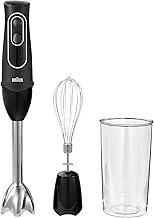
An immersion blender — also called a hand blender or stick blender — is one of those kitchen tools that tends to earn its counter space quickly. It is smaller than a countertop blender, easier to clean, and uniquely suited to blending directly in a pot, pitcher, or bowl without transferring hot liquids. For cooks who regularly make soups, sauces, smoothies, or puréed dishes, it can be a practical and efficient addition to the kitchen.
What Is an Immersion Blender?
An immersion blender is a handheld motorized blending tool with a blade assembly at the bottom. You submerge the blade end directly into the food or liquid you want to blend, rather than pouring the contents into a separate blender jar. This makes it especially practical for soups and sauces that are already cooking on the stovetop, since it eliminates the need to transfer hot liquids.
Key Features
- Direct blending in the pot: No need to transfer food to a blender jar, reducing cleanup and the risk of spills with hot liquids.
- Compact design: An immersion blender takes up far less storage space than a full countertop blender.
- Variable speed: Many models offer multiple speed settings for different textures.
- Detachable blending shaft: The lower portion of most models detaches from the motor for easier cleaning.
- Included accessories: Many immersion blenders come with a blending cup, whisk attachment, and chopper attachment, extending their functionality.
How It Can Be Used
Blending Soups
This is perhaps the most common use. Tomato soup, butternut squash soup, lentil soup, and similar dishes can be puréed directly in the cooking pot with an immersion blender, avoiding the process of ladling hot liquid into a countertop blender in batches.
Making Smoothies
An immersion blender with a blending cup can handle most smoothie recipes quickly and with less cleanup than a full blender. It works best with softer fruits, pre-thawed frozen fruit, and liquids — very fibrous or hard-frozen ingredients may be better handled by a powerful countertop blender.
Sauces and Dips
Homemade pesto, hummus, vinaigrette, hollandaise, and other sauces can all be prepared with an immersion blender in a cup or bowl.
Whipping Cream
With a whisk attachment, many immersion blenders can whip cream or egg whites, making them a more compact alternative to a handheld mixer for these tasks.
Baby Food Preparation
Immersion blenders are popular for making homemade baby food, as they can purée cooked fruits and vegetables quickly in small quantities.
Who Might Benefit Most
- Those who regularly make blended soups and want to avoid the mess of transferring hot liquids
- Cooks in smaller kitchens where counter space and storage are limited
- Anyone looking for a simple, low-maintenance blending solution for everyday tasks
- Parents preparing homemade baby food
- Smoothie drinkers who want a compact, single-serve blending option
Important Considerations
Power
Immersion blenders vary considerably in motor power. Lower-powered models work well for soft soups and light tasks but may struggle with harder ingredients or very thick mixtures. Higher-powered models handle more demanding blending with less effort.
Splashing
One of the more common issues with immersion blenders is splashing, particularly when blending thin liquids at high speed. Keeping the blending end fully submerged and starting on a lower speed can minimize this.
Not a Full Blender Replacement
An immersion blender is excellent for its intended uses but is not a complete replacement for a countertop blender. It generally produces less smooth results with very fibrous vegetables, seeds, or tough ingredients, and it cannot make thick frozen blended drinks as effectively.
Corded vs. Cordless
Corded models provide consistent power throughout use. Cordless models offer more freedom of movement but depend on battery charge, which can affect performance during extended blending sessions.
Immersion Blender vs. Countertop Blender
- An immersion blender is more convenient for direct-pot blending, takes less space, and is easier to clean.
- A countertop blender is more powerful, produces smoother results with tough ingredients, and is better for large quantities and frozen drinks.
- Many cooks find both useful for different tasks.
Frequently Asked Questions
Can I use an immersion blender in a hot pot on the stove?
Yes, though most manufacturers recommend removing the pot from the heat source first to avoid excessive spattering. Always check the maximum temperature rating for the specific model you are using.
Is an immersion blender dishwasher safe?
The detachable blending shaft and some accessories are typically dishwasher safe. The motor unit is not and should be cleaned by wiping with a damp cloth. Always check the manufacturer’s instructions.
How do I avoid splashing when using an immersion blender?
Keep the blade end fully submerged before turning the blender on, start at a lower speed, and use a deep, narrow container when possible. Tilting the blender slightly can also help direct the blending action inward.
Conclusion
An immersion blender is a simple, practical, and space-efficient kitchen tool that many cooks find themselves reaching for regularly. It excels at tasks like blending soups, making sauces, and preparing quick smoothies — all with minimal cleanup. While it is not a substitute for a powerful countertop blender in every situation, it fills a useful role in the kitchen and tends to justify its modest cost and storage space quickly. You can check more details and current options on Amazon here.